
Grandma Mae Marybelle Burton was an American aristocrat in our family. Her paternal grandparents’ lineage qualified the women in our family for membership with the Daughters of the American Revolution (DAR). Now, it seems this heritage also includes ancestors who arrived on the Mayflower ship that landed at Plymouth Rock over four-hundred years ago! Our ancestor is John Howland and his wife Elizabeth Tilley.
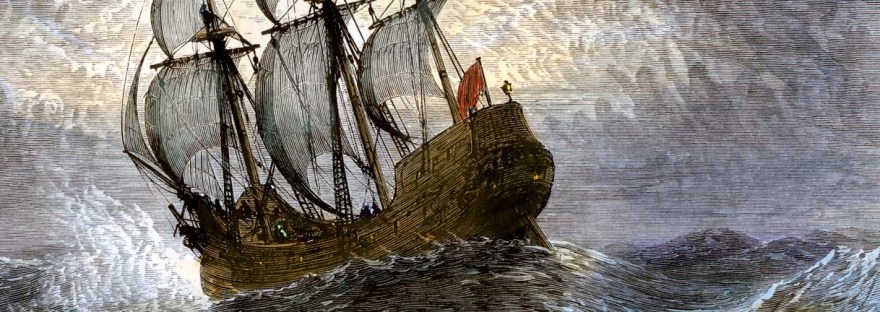
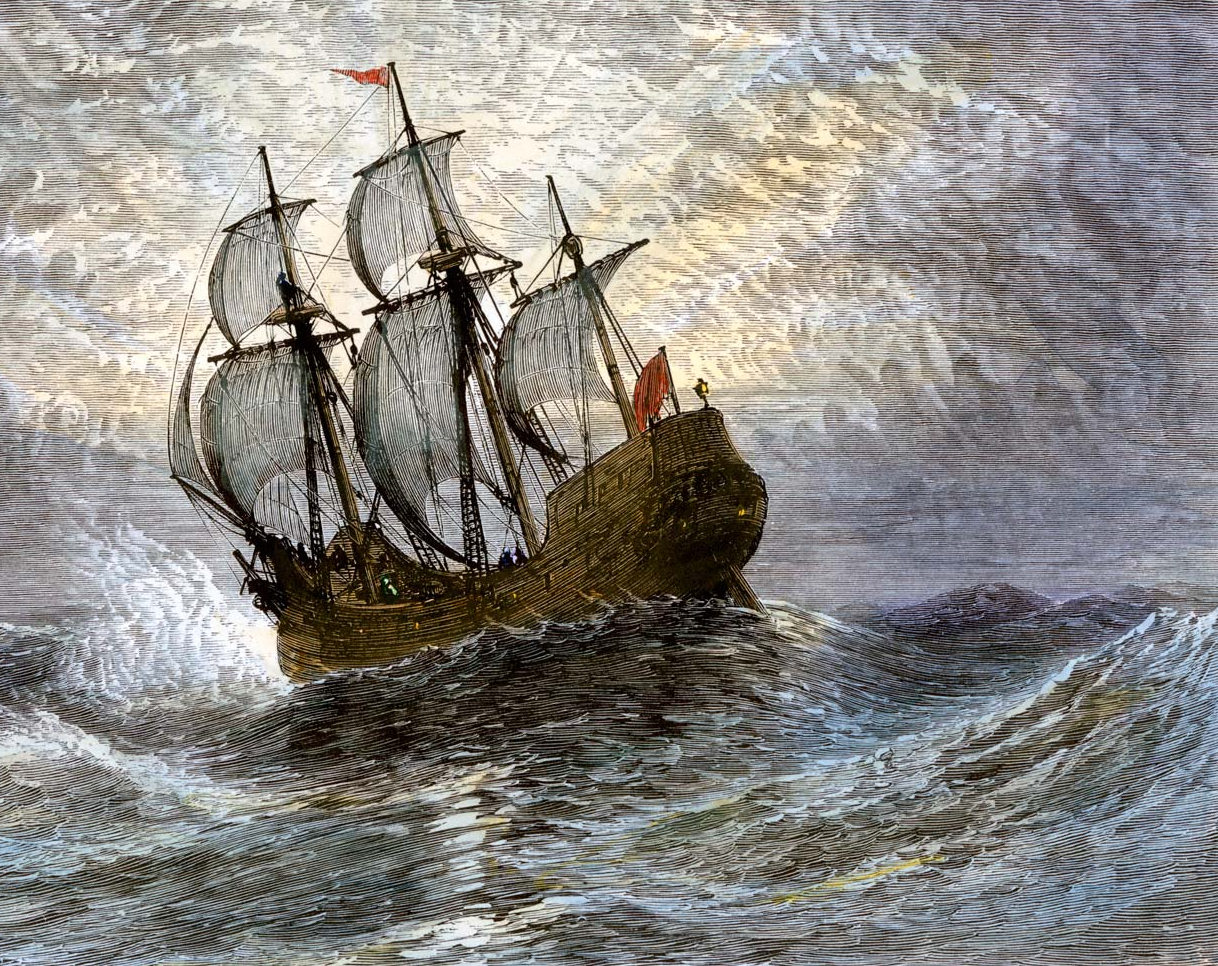
John Howland was about 20 years old when he boarded the Mayflower in 1620. At the time, he was a manservant working for John Carver. Howland was one of five servants the Carver family brought on the voyage. John nearly died during the Mayflower’s two-month journey across the Atlantic Ocean when he fell overboard during a violent storm. As he was falling, he grabbed onto a rope from the ship’s sails. With the storm raging around him, he hung on until crew members could pull him to safety.
In November 1620, the Mayflower dropped anchor off of the coast of Cape Cod, the homeland of the Wampanoag people. The only problem was that the ship was supposed to land in Jamestown, Virginia, where the English authorities had a colony.
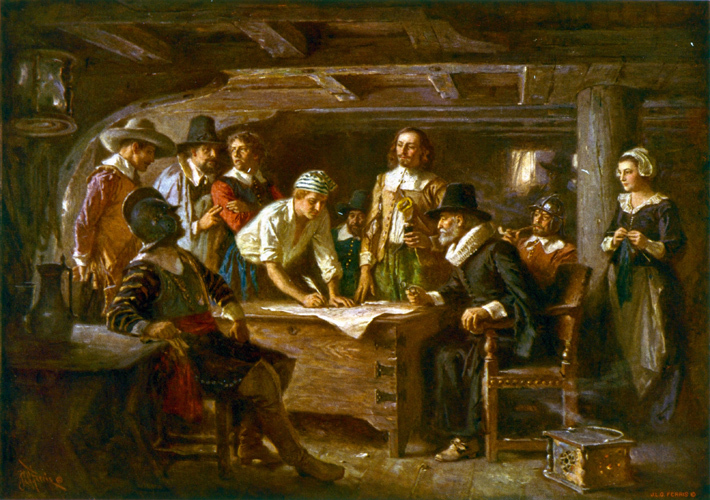
So, the Mayflower leaders drafted an agreement called the Mayflower Compact. It established that the passengers would found a self-governed colony that was loyal to the king of England. John was one of 41 adult men, out of 50 total on board, who signed the foundational document. Meanwhile, John Carver, our ancestor’s employer, became the colony’s first governor.
Around 1623, John married fellow Plymouth colonist Elizabeth Tilley, who had come over on the Mayflower with her mother and father. Her parents, along with about half the passengers, died in the winter of 1621. Governor John Carver and his wife had also died that year.
John and Elizabeth had 10 children together, all of whom went on the have large families of their own.
By 1633, John had become a freeman of the Plymouth Colony, meaning he held the right to vote in local governmental affairs. He went on to hold several important offices in the colony, including Colony Assistant, Deputy to the General Court, and head of a fur trade post in Kennebec, Maine.
By 1640, after living with his family on a farm in Duxbury, near Plymouth, John bought and moved to a homestead he called Rocky Nook. He and Elizabeth lived there for many years.
“I will and bequeath to my deare and loving wif Elizabeth…”
Text from John Howland’s will
John died in Plymouth around 1672, when he was in his 80’s. He was survived by his wife, all 10 of their children and their many grandchildren. In the text of his will, John left the farmhouse at Rocky Nook to his “deare and loving wif Elizabeth.” He is likely buried on Burial Hill in Plymouth, where a gravestone was later placed for him. It includes the quotation, in part, “Hee was a godly man and an ancient professor in the ways of Christ.”
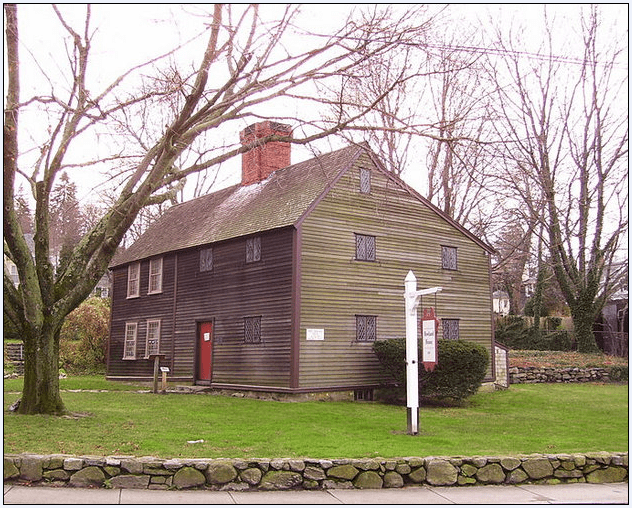
After John’s death, the house at Rocky Nook burned down, so Elizabeth moved in with her son Jabez, in a house at 33 Sandwich Street in Plymouth. Elizabeth lived with Jabez and his family for the next six years, until he sold the house. The house is now a museum and a site on the official National Register of Historic Places. It is the only building that Mayflower passengers lived in that still stands.
In total, John and Elizabeth’s children went on to have over 80 children themselves. Today, nearly two million people in the United States are their descendants!

 RUNS IN THE FAMILY